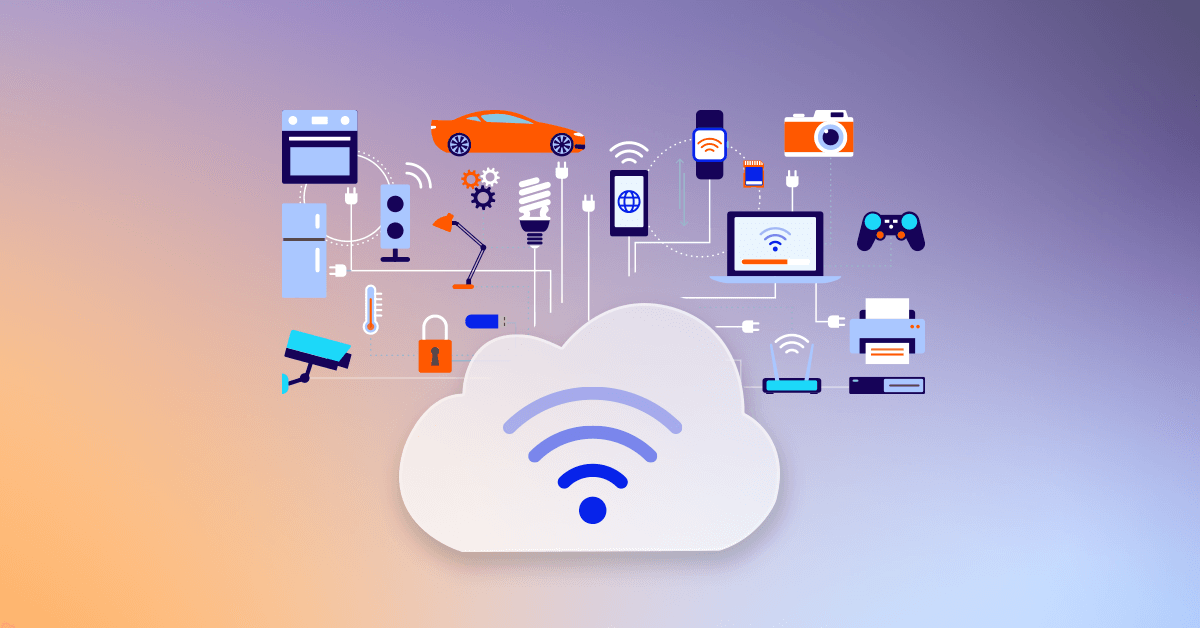

Did you know that global wireless security market is set to reach $18.3 billion by 2030? Since its invention, the wireless CCTV systems have been widely used and is only gaining more popularity with the advancement in technology, and user convenience.

How does the CCTV system work?

A CCTV system is a video system that displays real-time viewing as well as footage playback by strategically placing video cameras around a specific area. CCTV Cameras work by capturing a constant sequence of images that are then transmitted by cable or wirelessly to a display monitor where the sequence of images is demonstrated as video footage.

The two main types of CCTV system

Wired: Cameras and the rest of the system is hard-wired.

Wireless:  There are no wires required as the system works on an internet connection

How do Wireless CCTV Cameras work?

CCTV’s work on the principle as any other wireless device. They don’t connect with a wire, but use a short-range signal to connect to a hub or a device.

A wireless camera must maintain a signal connected to your network to record and capture footage, after which it is sent to a receiver that is connected to a built-in storage device or through cloud storage, and offers you 24/7 viewing access no matter where you are.

Benefits and Limitations of Wireless CCTV System

Benefits:

  • Easy to install
  • Budget-friendly
  • Portable
  • Easy Accessibility

Drawbacks:

  • Always need an internet connection.
  • A disrupted signal connection will force the Wireless cameras to retire.
  • They still need to be plugged into a power socket
  • Always need to be kept within the range of a central network

Conclusion

CCTV systems work based on capturing a sequence of images and displaying them as Real-time videos. The two types of CCTV systems are wired and wireless systems. Wireless systems work on the concept of connecting to a signal hub connection and giving you 24/7 viewing.

These systems are best for security, affordability, portability, and accessibility. Therefore, when you are purchasing wireless security systems, go for those that are built to handle your safety concerns and can last for years.

Point-to-point networks are used to connect two locations together via a private, dedicated line. This allows companies to transfer data between multiple buildings (for example) without the security risks of data being intercepted associated with a public internet connection.

The quality of service provided by a point-to-point network far exceeds that of a shared network – providing a faster, more reliable solution. This is why PTP networks are essential for any mission-critical applications.

Most commonly, businesses will use point to point networks for one of the following tasks:

  • Securely sharing files
  • Backing up data
  • VOIP and video conferencing
  • CCTV
  • Processing credit cards
  • And more
Point To Point Network Diagram

How Do Point To Point Networks Work?

Point to point networks use a microwave radio link to establish a connection between two locations.

Because microwave radio links are wireless, they are incredibly versatile. Which means they can:

  • Provide an ultrafast connection over many miles (or only a few metres) depending on your requirements
  • Provide a reliable connection for many decade (or just a few days) depending on your requirements

The network is quick to install (in as little as just 14 days), has uptimes exceeding 99.99%, isn’t adversely effected by weather and is ultra-low latency.

And because it’s a dedicated line, it has unlimited data allowance.

Alternative Fibre Connections

fibre ptp

Some PTP network providers will use a fibre leased line to link two buildings together. This will provide a fast, secure connection that’s similar to a microwave radio link in many ways.

However when compared to a microwave radio link, leased lines:

  • Cost a lot to install
  • Take a long time to install
  • Cannot be used on a temporary basis
  • Are susceptible to damage during fires, floods, roadworks etc.

Which is why most good providers in 2023 now use microwave radio links for point to point networks.

Need a PTP Network For Your Business?

The internet, sometimes simply called the net, is a worldwide system of interconnected computer networks and electronic devices that communicate with each other using an established set of protocols.

The internet was conceived by the Advanced Research Projects Agency (ARPA) of the U.S. government in 1969. ARPA was later renamed the Defense Advanced Research Projects Agency (DARPA) in 1972. DARPA’s first known packet-switching network was known as the Advanced Research Projects Agency Network (ARPANET). The original goal was to create a network that would let users of a research computer at one university talk to research computers at other universities. A side benefit of ARPANET’s design was that because messages could be routed or rerouted in more than one direction, the network could continue to function even if parts of it were destroyed in the event of a military attack or other disaster.

Today, the internet is a public, cooperative and self-sustaining facility accessible to hundreds of millions of people worldwide. It’s used by many as the primary source of information consumption and has fueled the creation and growth of its own social ecosystem through social media and content sharing. In addition, e-commerce, or online shopping, has become one of the largest uses of the internet. Millions of users shop for and sell products on the internet using popular e-commerce and marketing platforms, such as Amazon and Shopify.

History of the internet

In 1983, the ARPANET began using the Transmission Control Protocol/Internet Protocol (TCP/IP) open networking protocol suite and in 1985, the National Science Foundation Network designed the network to connect university computer science departments around the U.S.

Communications over the internet greatly improved in 1989 when the Hypertext Transfer Protocol (HTTP) was created, enabling different computer platforms to connect to the same internet sites. In 1993, the Mosaic web browser was created.